
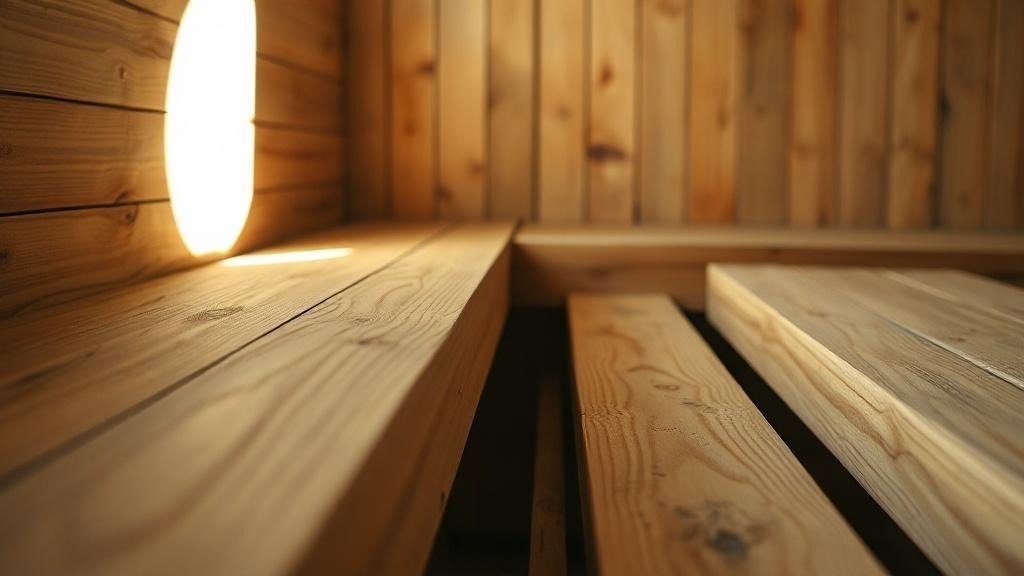
Good sauna and cold-plunge guidance around sauna sizing should sound like someone has actually installed and used the setup. Space, power, drainage, heat-up time, and routine all matter.
Last October I helped my neighbor Dan, a retired postal carrier in northern Virginia, unbox a “four-person” barrel sauna on his back patio. He’d measured the pad. He’d run conduit for the 240V line. He was excited. Then his wife, his college-age son, and his son’s girlfriend tried to sit down inside, and it became immediately, almost comically clear that four people could only fit if nobody moved their elbows. Dan ended up returning the unit and ordering the six-person model. The extra $1,800 hurt, but the sauna he actually uses every evening is worth more than the sauna he would have resented.
That experience captures the single most important thing about buying a backyard sauna: the marketed capacity is fiction. A “four-person” unit seats two adults and maybe a teenager in genuine comfort. If four people will realistically use it, buy the six-person. Bench length is the spec that actually determines usability, not the number on the product page.
Beyond sizing, most home sauna projects land between $2,490 and $16,980 all-in, depending on footprint, wood species, heater class, pad, and electrical. The boring truth is that half the budget (and most of the headaches) happen outside the sauna itself: in the pad prep, the 240V wiring, and the permitting. The sections below walk through what matters, what the research says, and what to skip.
Reading a Spec Sheet Without Getting Played
Spec sheets are where most buyers get confused, and where manufacturers are most likely to let marketing language do the heavy lifting for mediocre engineering.
Here’s the short list of what to actually look at:
Cabin size vs. heater output. The standard sizing rule is 1 kW per 50 cubic feet for an insulated cabin. A 6×7-foot cabin with an 8-foot ceiling is roughly 336 cubic feet, so a 6 to 7 kW heater is appropriate. Undersized heaters run constantly and burn out early. Oversized heaters short-cycle and waste electricity. Read the manufacturer’s published sizing chart instead of trusting a forum post from 2019.
Wood species and joinery. Pre-cut tongue-and-groove cladding in cedar, hemlock, thermo-aspen, or redwood is the baseline for anything worth buying. Cheap units substitute butt joints with felt strips. Those builds leak heat at the seams and look weathered inside two seasons. If the listing doesn’t specify the joinery type, that’s your answer.
Door hardware. It sounds minor, but a sauna door opens and closes thousands of times a year in a high-heat, high-humidity environment. Cheap hinges corrode. Glass panels with poor seals fog permanently. Check the hardware specs or at least the warranty coverage on the door assembly.
For cold-plunge tubs (since many backyard wellness setups now include both), the critical specs are chiller horsepower, filtration micron rating, and ozone/UV sanitation. A 1/3 HP chiller can hold 50°F in a small insulated tub in a temperate climate. Put that same setup in a Phoenix garage in August and it’ll run all day and still struggle.
What the Research Actually Shows
The landmark sauna study is Laukkanen et al., published in JAMA Internal Medicine in 2015. The team followed 2,315 middle-aged Finnish men over 20 years and found a dose-response relationship between sauna frequency and cardiovascular mortality. Men who used a sauna four to seven times per week had roughly half the cardiovascular mortality of once-a-week users.
A 2018 follow-up from the same research group, published in BMC Medicine, reported lower dementia incidence at the highest sauna frequencies. The proposed mechanisms (heat acclimation, improved endothelial function, a heart-rate response that mimics moderate exercise) are plausible but still being studied.
What this means for a homeowner: 20-minute sessions at 170°F to 195°F, two to four times a week, is a reasonable starting protocol. Hydrate before and after. Step out if you feel lightheaded. And if you have a cardiac history, uncontrolled blood pressure, or you’re pregnant, talk to your physician before you ever turn the heater on.
The Laukkanen data is observational, not randomized. Finnish sauna culture is deeply embedded in daily life in ways that don’t translate perfectly to an American buying a cedar box from a website. But the association is strong enough, and consistent enough across follow-up studies, that it’s fair to call regular sauna use a genuinely useful cardiovascular habit for healthy adults.
The Install: Pad, Wiring, and Ventilation
A sauna install is two projects duct-taped together. The carpentry side (assembling a pre-cut kit) is manageable for most handy adults with a helper and a free weekend. The electrical side is a different animal entirely.
Electrical. A typical traditional sauna heater pulls 4.5 to 9 kW on a dedicated 240V circuit at 30 to 50 amps. This is not optional DIY territory. A licensed electrician needs to run the circuit, size the breaker, pull the permit, and tie into your main panel. Cutting corners on 240V wiring is how house fires start. Full stop.
Pad. This comes first chronologically and matters more than most buyers realize. A 4-inch compacted gravel pad with proper drainage works for a barrel unit on flat ground. A cabin sauna in a cold or wet climate needs a 4-inch reinforced concrete slab, which runs roughly $4 to $7 per square foot installed. A pad that settles or cracks under a loaded sauna is exponentially more expensive to fix after the fact.
Ventilation. An outdoor sauna needs a fresh-air intake positioned below the heater and an adjustable exhaust on the opposite wall near the ceiling. Indoor builds typically require a passive vent to the outside or a properly sized exhaust fan. Skip this and you get stale, heavy air that makes sessions miserable.
Permitting. This varies wildly by jurisdiction. Many counties exempt detached structures under 200 square feet from building permits, but the electrical permit for a 240V circuit is almost always required regardless. Call your local building department before you order anything. A 5-minute phone call can save you a $2,000 mistake.
What It Actually Costs, All-In
The sticker price on a sauna unit is maybe 60% of the real number. Here’s a more honest breakdown:
On the sauna side: $2,490 for an entry-level barrel kit; $6,000 to $10,000 for a mid-tier cabin with a quality heater; $12,000 to $16,980 for a panoramic glass-front or premium thermo-aspen build. Add $400 to $900 for a gravel pad, $1,200 to $2,400 for a concrete pad, and $600 to $1,800 for the 240V electrical run.
Cold plunges, if you’re building a full contrast setup: $4,500 to $7,500 for a residential insulated tub with an integrated chiller; $9,000 to $14,000 for a commercial-grade stainless build. Stock-tank DIY approaches land near $400 to $900 but require manual ice, which gets old by week three.
On resale value, appraisers won’t give you dollar-for-dollar credit, but a well-built outdoor wellness setup is increasingly treated as a selling feature in Northeast and Pacific Northwest markets. Think of it like a quality deck: it doesn’t appraise at cost, but it moves listings faster.
On taxes: a residential sauna is rarely HSA or FSA eligible unless a clinician issues a Letter of Medical Necessity for a documented condition. This is patient-specific and plan-specific. Talk to your tax advisor before assuming a purchase qualifies.
Picking the Right Build for Your Situation
The honest comparison between sauna types comes down to five variables: footprint, heat-up time, physiological response, install complexity, and lifestyle fit.
An outdoor barrel sauna heats in 25 to 35 minutes and lives on a small pad. An indoor cabin heats faster but eats living space and requires venting. Infrared cabins operate at lower temperatures (120°F to 150°F), plug into standard outlets, and produce a different physiological response than traditional saunas. Whether that difference matters to you depends on whether you want the deep-heat, high-sweat Finnish experience or a gentler warm session.
The right answer is almost never the cheapest unit, and it’s rarely the most expensive one. It’s the build that fits your climate, your yard, your panel capacity, and (the part nobody talks about) the routine you’ll actually maintain five months from now.
If you want a thorough side-by-side on specific models, cabin dimensions, and heater matching, there’s a solid long-form reference at https://sweatdecks.com/blogs/news/sauna-sizing that goes deeper on specs and pricing than I can fit here. Worth bookmarking before you commit.
When to Call a Pro (and When You Don’t Need One)
Three moments in a sauna project where a professional earns their fee:
Electrician. Any time a 240V circuit is involved. This covers most traditional heaters and commercial-grade cold-plunge chillers. Non-negotiable.
Contractor or experienced handyman. For pad work in freeze-thaw climates or on soft, expansive soil. Getting the base right before the unit arrives is dramatically cheaper than fixing it after.
Physician. Before starting any heat or cold protocol if you have an arrhythmia, uncontrolled hypertension, a recent cardiac event, Raynaud’s phenomenon, are pregnant, or are managing a chronic condition. A 10-minute conversation with your doctor is the correct first step. The research is encouraging for healthy adults, but it doesn’t replace individual medical evaluation.
FAQs
Is a sauna safe during pregnancy?
Pregnant individuals should not start a new sauna or cold-plunge routine without explicit clearance from their OB-GYN. Core temperature elevation carries real fetal risks, particularly in early pregnancy. This is not a gray area; defer to your physician.
How loud is a sauna?
A traditional sauna heater is effectively silent. Cold-plunge chillers run at roughly 45 to 55 dB at one meter, comparable to a quiet conversation. Position the unit where the chiller hum won’t carry to neighbor bedrooms or your own.
Can I run a sauna year-round in cold climates?
Yes, with planning. Outdoor saunas are built for cold weather and benefit from a winter pre-heat schedule (allow extra warm-up time). Cold plunges with insulated tubs and integrated chillers handle below-freezing ambient temps if the chiller’s rated operating range covers it. Check the spec sheet for low-temperature performance before purchasing.
What is the lifespan of a quality sauna?
A well-built cedar or thermo-aspen sauna lasts 15 to 25 years with light annual maintenance. Heaters are usually replaced once during that span. Stainless-steel cold-plunge tubs last 15 to 20 years; chillers typically need replacement or rebuilding every 6 to 10 years.
Do I need a permit for a sauna?
Many municipalities exempt detached structures under 200 square feet from building permits. The electrical permit for a 240V circuit is almost always required. Call your local building department before ordering the kit.
Disclaimer. This article is general consumer information, not medical advice. Heat and cold therapies carry real cardiovascular load. Anyone with arrhythmias, uncontrolled hypertension, Raynaud’s phenomenon, recent cardiac events, or who is pregnant should consult a physician before starting any new sauna or cold-plunge routine.
Any 240V electrical work should be completed by a licensed electrician under the appropriate local permit.
HSA and FSA reimbursement on wellness equipment is patient-specific and depends on a Letter of Medical Necessity from a clinician. Talk to your tax advisor before assuming a purchase qualifies.